Best Of
Re: Si vis pacem, para bellum – politicalbetting.com
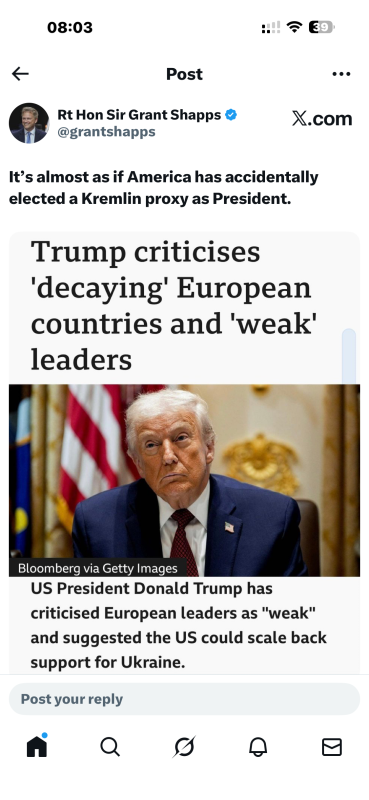
Yes.When I were a lad, we were told that Russia was our enemy and the USA was our friend. Some of us thought that wasn’t true, but I never thought I’d see the day when they were both our enemies.Is America more of an enemy than it was during the Suez crisis?
Re: It’s looking like ajockalypse now for Labour – politicalbetting.com
I disagree.Perhaps more that the politicians haven’t any experience in running large organisations. So they don’t know what to do apart from make a speech and bang on a desk.I agree that politicians have become infantilised, to the extent that they seem to have persuaded themselves that they are incapable of doing things. "We've tried nothing and we're all out of ideas" seems to have been the motto for at least the last decade.True dat. It was a leap of faith on her part that growth would appear. It may have. It may not have. But the fact that the City freaked out and killed her was an indication of who holds the power.My understanding is that Truss's downfall was her inability to produce figures in support of the plan. This freaked out the City.Labour may yet demonstrate that Liz Truss is not the worst possible PM.In all honesty, we are pretty much there already.
- Truss had a belief regarding what was wrong with the country and a plan to cure it. Her downfall was her inability to get anybody to agree to it enough to ride out the initial turbulence.
- Starmer has no beliefs regarding what was wrong with the country and no plan to cure it. He sees his job as carrying out the law regardless of whether it is right, wrong, or orthogonal to the problem. His downfall is his mental inability to realise this.
Whether it is Truss and the City, Starmer and the SC, or Burnham and the hedge funds, our politicians have become infantilised, lacking the power to change things or even to realise that things can be changed.
The latest example is Starmer's request that the EHRC be changed so that he can do things. Does he even realise he's Prime Minister? Or does he just sit upright fully dressed in the dark, waiting for somebody to switch him on so he can perform his daily tasks?
This is despite the fact that British cabinet ministers and prime ministers are among the least constrained executive officers in any democratic government (witness Starmer just appointing 25 new members to the upper house). A prime minister with a majority in the commons is an "elective dictator", to paraphrase Lord Hailsham: there is very little that he or she cannot legally do, especially (though not only) with a manifesto commitment to do it in place before election.
Ministers can arbitrarily reorganise, close down, or set up departments. Whole new ministries can be created, merged, or abolished at whim. For all of the claims of civil service obstructionism, this includes the very departments those civil servants work in, and the management and incentive structures that govern them.
My guess is that our government ministers have simply forgotten how to govern. You can get a sense of it from Michael Gove's complaints about "the blob". A competent administrator would be able to describe the system they're in charge of, its internal structure, long-term strategy and short-term goals, incentives, distribution of power and decision-making capacity, and so on. Such a description would be detailed and fine-grained. Instead, Gove (and others, I only single him out because he so readily admits this in public) have only a coarse-grained understanding of what's going on, hence the "blob", a thing that lacks any detail or distinction between its various parts. They can write essays and give speeches about the kind of world they'd like to live in, but have no real idea about how to organise a group of more than about 5 people to do anything about it. (Some of them can't even manage that).
The ECHR and international treaties is one area where I have a bit more sympathy, if only because there really are consequences to weigh up. If we think of Starmer as the CEO, he has complete power of hiring and firing over his employees, and the products his firm produces, but he might want to think carefully about breaking off contracts with suppliers and customers. That said, even there the doctrine of "efficient breach" says that if keeping to a deal costs you more than whatever you lose from withdrawing from it, you may be well advised to simply go ahead. The only tricky point here is that sometimes our estimates of the costs and benefits haven't been as accurate as we might like! If Starmer really can get an agreed change to how the ECHR is applied, then that seems like a strictly better outcome than unilaterally breaking the terms. (Time will tell if he can, of course).
Politicians are not Chief Executives - they are the Board of Directors. I spent a lot of my working life in local Government and one of the councils for whom I worked was a billion pound organisation which, unlike larger and more homogenous entities, covered a huge diversity of activities from social care to highway maintenance and from making dresses to running schools.
The change in governance to a Cabinet structure created a small tranche (cabal or clique also work) of Councillors who were basically full time and worked closely with the Chief Executive and Service Directors across the range of activities. The remaining backbench councillors were usually only interested in what was happening in their patch.
The lines between Cabinet members and senior officers weren't always clear and the personal relationships (or lack of them) played a big part in the effectiveness of the decision making process within the Council.
If a County Council or London Borough Council leader got into Parliament - one example being my local MP Sir Stephen Timms, they would have a much fuller knowledge of how local services work and what to do when they don't.
The problem with business people in politics is they are used to command and cajole - their word is law and the flunkies run round after them. In councils, command and cajole doesn't work - it's more argue and persuade primarily colleagues but also powerful local interest groups. It's my experience senior business people coming into local Government think they can get their way by shouting and screaming and when that fails they end up retreating into blustering.
 stodge
5
Re: It’s looking like ajockalypse now for Labour – politicalbetting.com
Completing action ahead of the next meeting? What kind of crazy organisation is this?I just pull out the bullet points myself. The purpose is that you can beat up colleagues on the next call if they haven't done what was agreed. Even better and with a small amount of organisation is send the previous meeting notes a couple days ahead of the next meeting so they get reminded and might actually do whatever was agreed.You can then ask Copilot to summarise the summary. Then summarise the summary of the summary.My last workplace uses Copilot to summarise Teams calls. The summaries are accurate and on balance useful. They are massively verbose when all you want is a few bullet points. On the other hand not having to take notes allows you to focus on running the meeting. And the summaries are better than no notes at all.On the subject of AI, several NHS Trusts near me are planning to use AI to listen to consultations in outpatients, and produce a summary for the electronic notes and for the patient in printed or electronic form.All of our team calls are already recorded and summarized by AI. I am not aware of anybody that has ever looked at one of the recording, or read the summary.
I am not sure how well this can work (how does it record examination findings, imaging and other investigations?), but I would be interested in PB's thoughts on consent and related issues. How would people feel about similar technology being used in other professional contexts such as discussions with lawyers, accountants, clergy and police?
The company says that the recording will be erased after 30 days (giving time for corrections to be made) and only the AI summary to be part of the records.

Re: It’s looking like ajockalypse now for Labour – politicalbetting.com
Under Trump the US has gone from being a largely benign hegemon to an extremely malign (but also inept) one with alarming speed. I think a coalition of willing liberal democracies needs to get its act together asap or face the destruction of our way of life.Meloni toned down her anti-EU rhetoric the minute she got into power, and most Italians instinctively understand that having Europe running things is preferable to giving free rein to the tendency of its domestic politicians toward corruption. Poland isn’t going to go anti-EU any time soon, given the leading role the EU has played in transforming Poland into a country now snapping, economically, at our heels. Why Austria is in the list is a mystery. Hungary would be no loss, as you say, although there is a strong anti-Orban movement in the capital, at least.Errr, you what?Is that how it read in its original Russian?
"Leaked files ‘show US wants to persuade four nations to leave EU’
The countries seen as targets to follow Brexit are Austria, Hungary, Italy and Poland, according to leaked details of the US national security strategy"
https://www.thetimes.com/us/american-politics/article/us-mega-eu-trump-pqhz8gplr
Not that Hungary would be much of a loss.
The Trumpy Republicans appear to have shape shifted from being American isolationists to wanting to actively intervene around the globe to either reshape other countries in their own image or turn them into impotent clients. Thats not a positive development.

Re: It’s looking like ajockalypse now for Labour – politicalbetting.com
How much useful political experience is around them? Who are the heavyweight politicians of the day with 20 years experience at cabinet or shadow cabinet level?I agree that politicians have become infantilised, to the extent that they seem to have persuaded themselves that they are incapable of doing things. "We've tried nothing and we're all out of ideas" seems to have been the motto for at least the last decade.True dat. It was a leap of faith on her part that growth would appear. It may have. It may not have. But the fact that the City freaked out and killed her was an indication of who holds the power.My understanding is that Truss's downfall was her inability to produce figures in support of the plan. This freaked out the City.Labour may yet demonstrate that Liz Truss is not the worst possible PM.In all honesty, we are pretty much there already.
- Truss had a belief regarding what was wrong with the country and a plan to cure it. Her downfall was her inability to get anybody to agree to it enough to ride out the initial turbulence.
- Starmer has no beliefs regarding what was wrong with the country and no plan to cure it. He sees his job as carrying out the law regardless of whether it is right, wrong, or orthogonal to the problem. His downfall is his mental inability to realise this.
Whether it is Truss and the City, Starmer and the SC, or Burnham and the hedge funds, our politicians have become infantilised, lacking the power to change things or even to realise that things can be changed.
The latest example is Starmer's request that the EHRC be changed so that he can do things. Does he even realise he's Prime Minister? Or does he just sit upright fully dressed in the dark, waiting for somebody to switch him on so he can perform his daily tasks?
This is despite the fact that British cabinet ministers and prime ministers are among the least constrained executive officers in any democratic government (witness Starmer just appointing 25 new members to the upper house). A prime minister with a majority in the commons is an "elective dictator", to paraphrase Lord Hailsham: there is very little that he or she cannot legally do, especially (though not only) with a manifesto commitment to do it in place before election.
Ministers can arbitrarily reorganise, close down, or set up departments. Whole new ministries can be created, merged, or abolished at whim. For all of the claims of civil service obstructionism, this includes the very departments those civil servants work in, and the management and incentive structures that govern them.
My guess is that our government ministers have simply forgotten how to govern. You can get a sense of it from Michael Gove's complaints about "the blob". A competent administrator would be able to describe the system they're in charge of, its internal structure, long-term strategy and short-term goals, incentives, distribution of power and decision-making capacity, and so on. Such a description would be detailed and fine-grained. Instead, Gove (and others, I only single him out because he so readily admits this in public) have only a coarse-grained understanding of what's going on, hence the "blob", a thing that lacks any detail or distinction between its various parts. They can write essays and give speeches about the kind of world they'd like to live in, but have no real idea about how to organise a group of more than about 5 people to do anything about it. (Some of them can't even manage that).
The ECHR and international treaties is one area where I have a bit more sympathy, if only because there really are consequences to weigh up. If we think of Starmer as the CEO, he has complete power of hiring and firing over his employees, and the products his firm produces, but he might want to think carefully about breaking off contracts with suppliers and customers. That said, even there the doctrine of "efficient breach" says that if keeping to a deal costs you more than whatever you lose from withdrawing from it, you may be well advised to simply go ahead. The only tricky point here is that sometimes our estimates of the costs and benefits haven't been as accurate as we might like! If Starmer really can get an agreed change to how the ECHR is applied, then that seems like a strictly better outcome than unilaterally breaking the terms. (Time will tell if he can, of course).
Closest would be Ed Miliband and Yvette Cooper ffs! Outside of cabinet/shadow you have just David Davis and IDS.
The career trajectory of our politicians is seriously screwed. They are both promoted and discarded way too quickly.

Re: It’s looking like ajockalypse now for Labour – politicalbetting.com
I agree that politicians have become infantilised, to the extent that they seem to have persuaded themselves that they are incapable of doing things. "We've tried nothing and we're all out of ideas" seems to have been the motto for at least the last decade.True dat. It was a leap of faith on her part that growth would appear. It may have. It may not have. But the fact that the City freaked out and killed her was an indication of who holds the power.My understanding is that Truss's downfall was her inability to produce figures in support of the plan. This freaked out the City.Labour may yet demonstrate that Liz Truss is not the worst possible PM.In all honesty, we are pretty much there already.
- Truss had a belief regarding what was wrong with the country and a plan to cure it. Her downfall was her inability to get anybody to agree to it enough to ride out the initial turbulence.
- Starmer has no beliefs regarding what was wrong with the country and no plan to cure it. He sees his job as carrying out the law regardless of whether it is right, wrong, or orthogonal to the problem. His downfall is his mental inability to realise this.
Whether it is Truss and the City, Starmer and the SC, or Burnham and the hedge funds, our politicians have become infantilised, lacking the power to change things or even to realise that things can be changed.
The latest example is Starmer's request that the EHRC be changed so that he can do things. Does he even realise he's Prime Minister? Or does he just sit upright fully dressed in the dark, waiting for somebody to switch him on so he can perform his daily tasks?
This is despite the fact that British cabinet ministers and prime ministers are among the least constrained executive officers in any democratic government (witness Starmer just appointing 25 new members to the upper house). A prime minister with a majority in the commons is an "elective dictator", to paraphrase Lord Hailsham: there is very little that he or she cannot legally do, especially (though not only) with a manifesto commitment to do it in place before election.
Ministers can arbitrarily reorganise, close down, or set up departments. Whole new ministries can be created, merged, or abolished at whim. For all of the claims of civil service obstructionism, this includes the very departments those civil servants work in, and the management and incentive structures that govern them.
My guess is that our government ministers have simply forgotten how to govern. You can get a sense of it from Michael Gove's complaints about "the blob". A competent administrator would be able to describe the system they're in charge of, its internal structure, long-term strategy and short-term goals, incentives, distribution of power and decision-making capacity, and so on. Such a description would be detailed and fine-grained. Instead, Gove (and others, I only single him out because he so readily admits this in public) have only a coarse-grained understanding of what's going on, hence the "blob", a thing that lacks any detail or distinction between its various parts. They can write essays and give speeches about the kind of world they'd like to live in, but have no real idea about how to organise a group of more than about 5 people to do anything about it. (Some of them can't even manage that).
The ECHR and international treaties is one area where I have a bit more sympathy, if only because there really are consequences to weigh up. If we think of Starmer as the CEO, he has complete power of hiring and firing over his employees, and the products his firm produces, but he might want to think carefully about breaking off contracts with suppliers and customers. That said, even there the doctrine of "efficient breach" says that if keeping to a deal costs you more than whatever you lose from withdrawing from it, you may be well advised to simply go ahead. The only tricky point here is that sometimes our estimates of the costs and benefits haven't been as accurate as we might like! If Starmer really can get an agreed change to how the ECHR is applied, then that seems like a strictly better outcome than unilaterally breaking the terms. (Time will tell if he can, of course).
 rjk
rjk
5
Re: It’s looking like ajockalypse now for Labour – politicalbetting.com
Your daily Ajax.Sounds to me like GDLS are cutting through all of the "process state" bullshit so detested by our right wing chums on here.
https://x.com/MilitaryBanter/status/1999095846353121456
Detailed Employee Account: Systemic Issues within the General Dynamics Ajax Programme
As a long-serving General Dynamics employee working directly on the Ajax vehicle programme, I feel compelled to document the profound systemic and cultural failures I have witnessed. My surprise is not that the programme has encountered technical challenges, but that the sheer scale and nature of the issues—many stemming from managerial pressure and a culture of corner-cutting—have not been brought to light earlier in a meaningful way.
The problems extend far beyond design flaws. On the shop floor, we operate under intense pressure from management to meet deadlines, often at the expense of procedure and safety. The prevailing directive from certain managers is to "just make it fit," with instructions to "do what you got to do—grind it, cut it, hammer it in, or boot it." This ethos of force-fitting components directly contradicts engineering standards and creates inherent vulnerabilities in the vehicle's integrity.
I have observed managers and quality personnel witnessing these practices without intervention, effectively endorsing them. Specific, recurring failures include:
· Critical Safety Omissions: Armour bolts left unfitted behind the VIP bin, compromising ballistic protection.
· Persistent Functional Failures: The driver's hatch mechanism continues to fail despite being a known, long-standing issue.
· Chronic Leaks: Fuel and hydraulic leaks are commonplace, indicating persistent sealing or subsystem integration problems.
· Falsified Safety Records: Most alarmingly, I have seen safety notices stamped off as completed. Upon physical verification, the required work had not been done. A grave example is within the Ajax battery compartment, a high-risk area that remains live even after isolation. Signing off on unperformed work here is not just negligent; it is dangerously irresponsible.
The logistical and support side of the programme is equally broken. We face severe parts shortages. To keep the current production line moving, we have been systematically cannibalising vehicles from a storage fleet of approximately 50 trucks in Llanelli. These vehicles haven't been started in years, their batteries are long dead, and we strip them for components because new parts are simply unavailable. This is not sustainable manufacturing; it is a desperate and inefficient salvage operation that underscores a profound failure in supply chain management.
Perhaps most disheartening is the cultural corrosion. A specific example that shocked me was witnessing a former 2ic (second-in-command) at the Merthyr site rapidly abandon his principles upon accepting a managerial position within General Dynamics...
Also, any suggestion that we increase defence spending should just be met with the word, "Ajax."
 Dura_Ace
5
Re: It’s looking like ajockalypse now for Labour – politicalbetting.com
Thanks.Thank you, Sean. You are so much better than AI.I think it was Cynisca, the sister of King Agesilaos of Sparta, who won a load of prizes for chariot racing, as owner and trainer, in the 390's. But, no woman was allowed to drive a chariot, at the contest. The fact that elite Spartan women took part in their own athletic contests, naked, was a source of fascination to the Greeks.Sean, you're a classics whizz. Save me the bother of looking it up. Wasn't it the success of a female charioteer that caused the introduction of a men only rule?Chariot racing was an Olympic sport that was open to women, in the ancient world.Just wondering how popular the pankration* and the chariot racing** would be.There's no clear defining line, but rather a range from the more pure end (athletics) to the peculiar (breakdancing). Olympic sport introduces a further refinement in that it suggests some connection with the ancient games. This brings dressage safely within the fold because equestrianism generally was such a big part of the games back then, even though many today scoff at horses dancing. Many other sports however that we accept at normal would have puzzled the ancient Greeks. Syncronised swimming puzzles me, by any criterion.Bosanquet (who invented the googly) drew a distinction between games where the ball is still (golf, billiards) and where it is in motion (cricket, football). Extrapolating from that would place darts and archery in the still camp.One of the criteria citied often of whether something is a sport or not is 'Can you play it in a pub'.Darts is more of a sport than F1 is.Can't see that it requires any less hand-eye co-ordination than say archery or golf?It’s a pub game, so not a real sport.Littler is the only person there who turned his sport upside down by his talent.Hannah HamptonWhy would it be funny?
Chloe Kelly
A womens rugby player
Luke Littler
Rory McIlory
Lando Norris
Hampton won’t win it, but would be very funny if she did.
Anyway, the full SPotY shortlist is gender-balanced but with two lady footballers so presumably not too much thought went into it.
Chloe Kelly – Football
Ellie Kildunne – Rugby Union
Hannah Hampton – Football
Lando Norris – Formula 1
Luke Littler – Darts
Rory McIlroy – Golf
https://www.bbc.co.uk/sport/articles/cx2d33y4gzwo
Looking forward to next year's race in the Dog and Duck.
*their form of MMA
**IIRC it was the *owner* who got the prize?
Other than that, womens' sports and gladiatorial contests were considered a form of porn.
I wonder that Robert Smithson has not tried to market you.
The problem with AI is that time and again, it gives plausible-sounding, but wrong, answers. I asked AI to describe the fortress of Masada, and it came back with an answer that was perfect, save for one minor point. It said that Herod the Great built the fortress in 100 BC, 28 years before he was born.
You can usually get an adequate historical answer, if you ask AI a question, for which there is a lot of online content. The less content, the more inaccurate it will be.
But, lazy students will just treat AI as gospel, and get failed accordingly. To my mind, AI should be treated like Sat Nav, or calculators. You should have a fair idea already what the answer should be, and if it comes back with something that doesn't seem right, you should verify it yourself.
 Sean_F
10
Re: It’s looking like ajockalypse now for Labour – politicalbetting.com
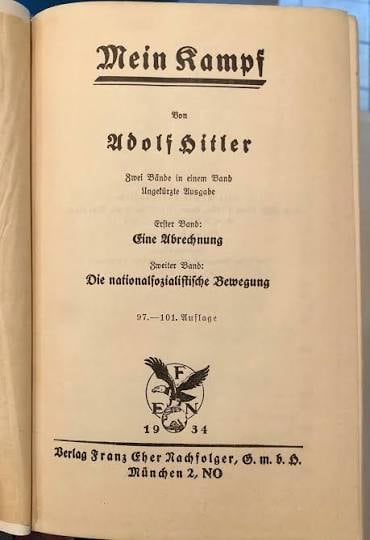
If Trump wants a manly font instead of Calibri wouldn't Fraktur be a better replacement than Times New Roman?
 FF43
FF43
5
Re: It’s looking like ajockalypse now for Labour – politicalbetting.com
I don’t wish to alarm you all but Sir Grant Shapps speaks sense.